
.jpg)
Почему на 5долларовой купюре изображён вестибюль станции метро «Кировский завод»?
1. Потому что мемориал Аврааму Линкольну и наземные сооружения станции "Кировский Завод" восходят к одному и тому же прообразу — Парфенон.
2. И потому что учитель, наставник и формальный научный руководитель архитектора Александра Кузьмича Андреева — Владимир Алексеевич Щуко, ставший академиком архитектуры ещё в 1911 году, известен именно как неоклассик.

The temple may have been dedicated to Zeus, 161 meters long, and it was supported by columns more than 21 metres tall!
©alamy stock

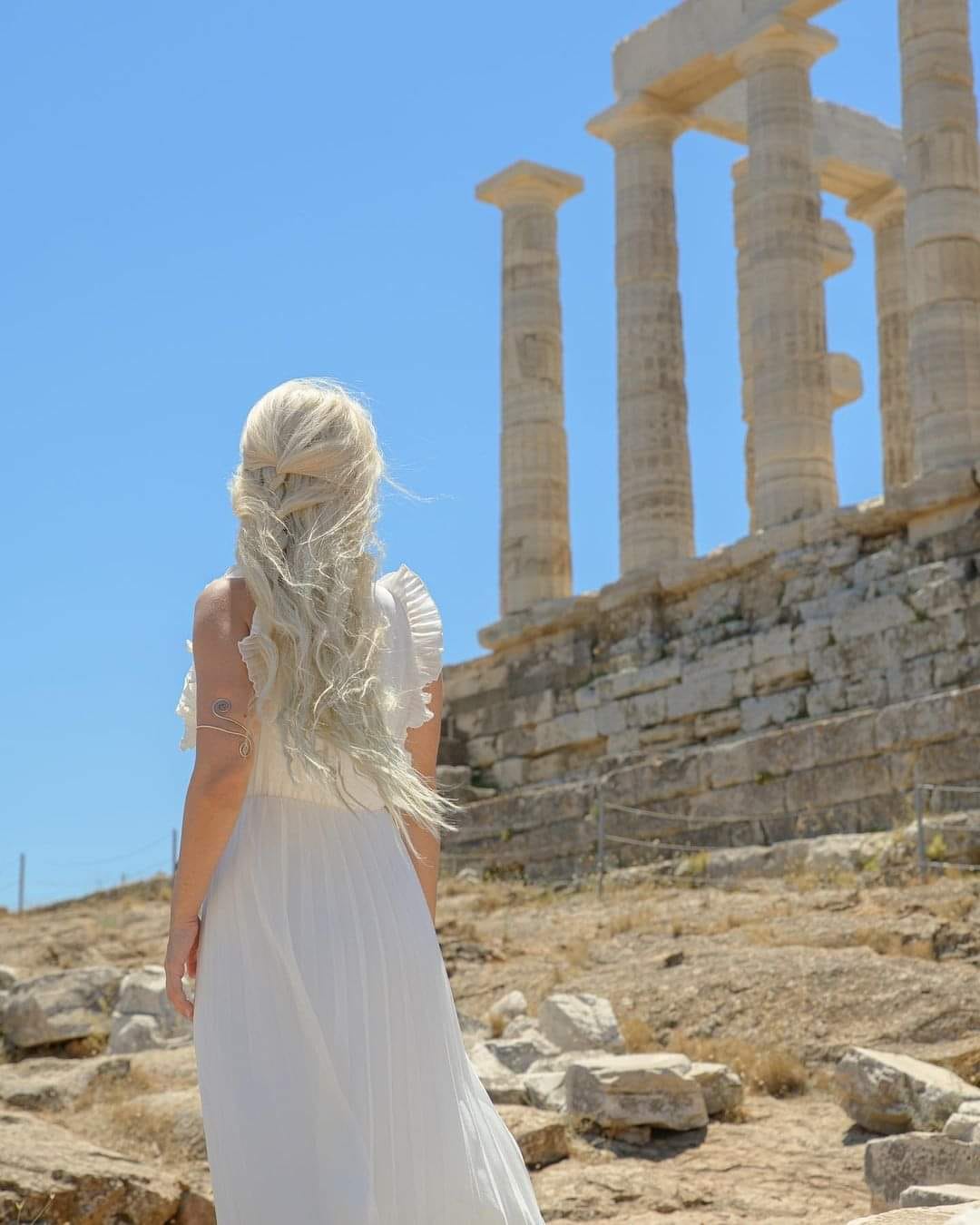
The temple of Poseidon, the ancient Greek god of the sea, dominates the southernmost tip of Attica, where the horizon meets the Aegean Sea. Perched on the craggy rocks of Cape Sounio, the temple is enveloped in myth and historic facts dated from antiquity until the present times.
There are stories about the ship of King Menelaus who stopped briefly at Sounio on his way back from Troy; or about the unfortunate King Aegeus who drowned himself on that spot and the Aegean Sea got named after him; or about the people who built a temple using local marble to honour the god of the sea and safeguard the profits from the neighbouring Lavrio mines.
The unknown architect is probably the same one who built Theseion in the Ancient Agora of Athens. He decorated the temple with sculptures made of Parian marble (i.e. from Paros Island), which depicted the labours of Theseus as well as battles with Centaurs and Giants (Gigantes). The remaining sculptures are showcased in the Lavrio Museum whereas the impressive kouroi [male youths] that once stood in the temple yard are now on display in the National Archaeological Museum of Athens.
Notice the Doric columns, count their flutes and you will see that they are less in number than those on other temples of the same period (mid 5th c. BC). This feature is also found in other seaside ancient temples, for instance in the Temple of Aphaea in Aegina etc.




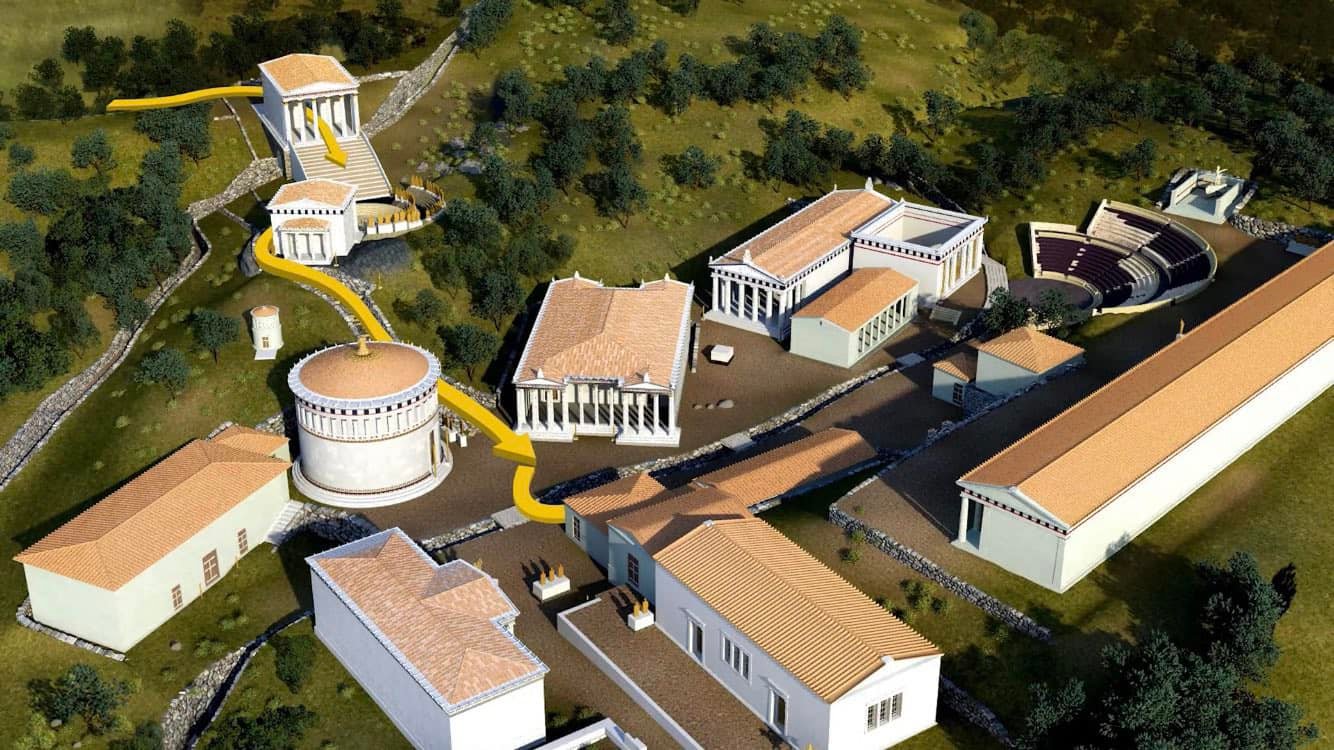
The Samothrace Temple Complex, known as the Sanctuary of the Great Gods (Modern Greek: Ιερό των Μεγάλων Θεών Ieró ton Megalón Theón), is one of the principal Pan-Hellenic religious sanctuaries, located on the island of Samothrace within the larger Thrace. Built immediately to the west of the ramparts of the city of Samothrace, it was nonetheless independent, as attested to by the dispatch of city ambassadors during festivals.
It was celebrated throughout Ancient Greece for its Mystery religion. Numerous famous people were initiates, including the historian Herodotus, one of very few authors to have left behind a few clues to the nature of the mysteries, the Spartan leader Lysander, and numerous Athenians. The temple complex is mentioned by Plato and Aristophanes.
During the Hellenistic period, after the investiture of Phillip II, it formed a Macedonian national sanctuary where the successors to Alexander the Great vied to outdo each other's munificence. It remained an important religious site throughout the Roman period. Hadrian visited, and Varro described the mysteries. The cult fades from history towards the end of Late Antiquity, when the temple would have been closed during the persecution of pagans in the late Roman Empire.


Уникальное место, конечно! Здесь до сих пор проводятся обряды, видны следы жертвоприношений и магических обрядов в алтарной части, где сейчас яма. Раз в год здесь проходит большой обряд на который съезжаются Ведающие со всего мира.
(с) Сергей Видрих


 "... Надо обновить идею эллинизма, так как мы пользуемся ложными общими данными... Я наконец понял, что говорил Шопенгауэр об университетской философии. В этой среде неприемлема никакая радикальная истина, в ней не может зародиться никакая революционная мысль. Мы сбросим с себя это иго... Мы образуем тогда новую греческую академию... Мы будем там учителями друг друга... Будем работать и услаждать друг другу жизнь и только таким образом мы сможем создать общество... Разве мы не в силах создать новую форму Академии?.. Надо окутать музыку духом Средиземного моря, а также и наши вкусы, наши желания..."


